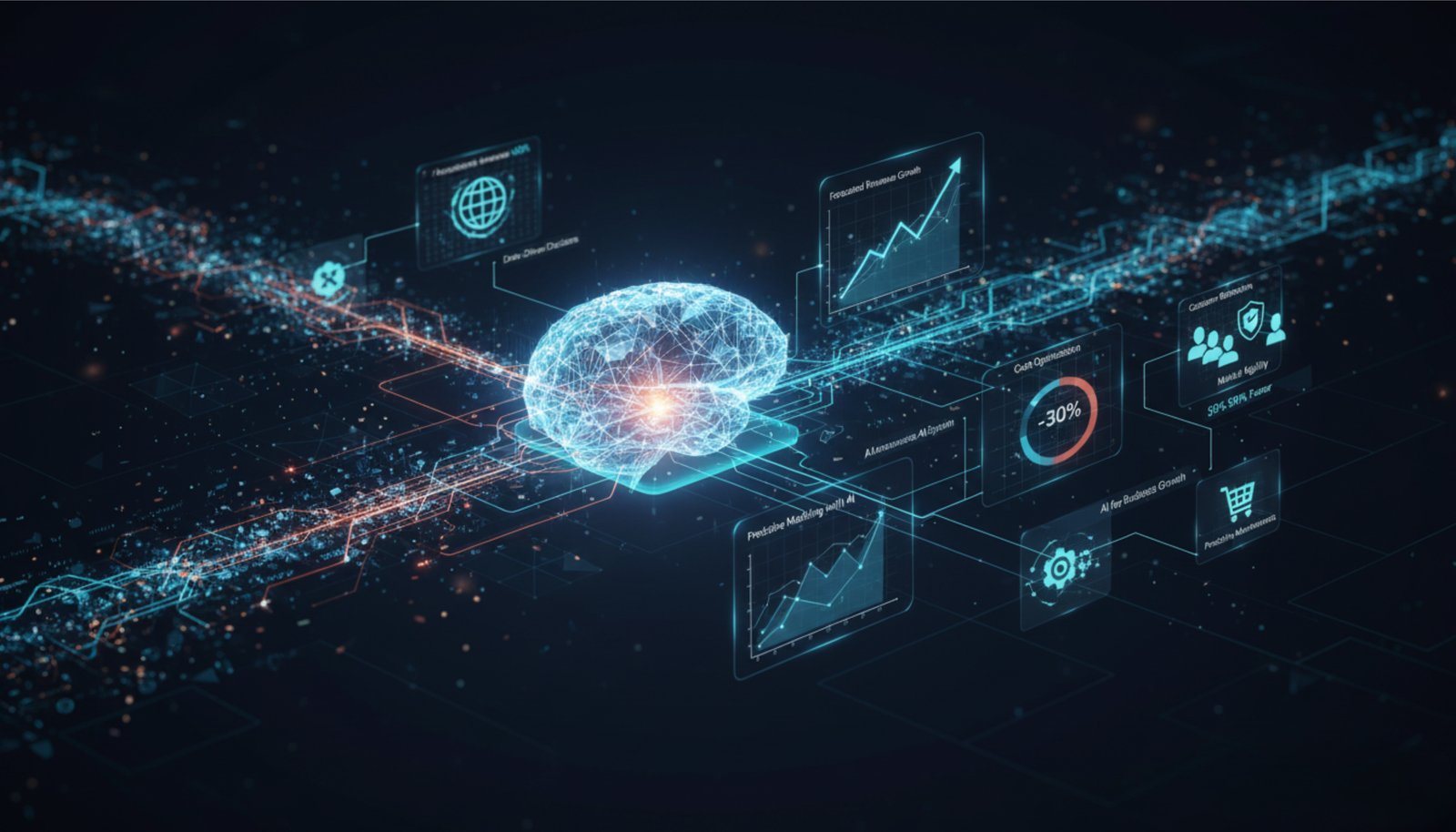
The Rise of AI-Driven Predictive Analytics - Turning Data Into Business Foresight
Introduction
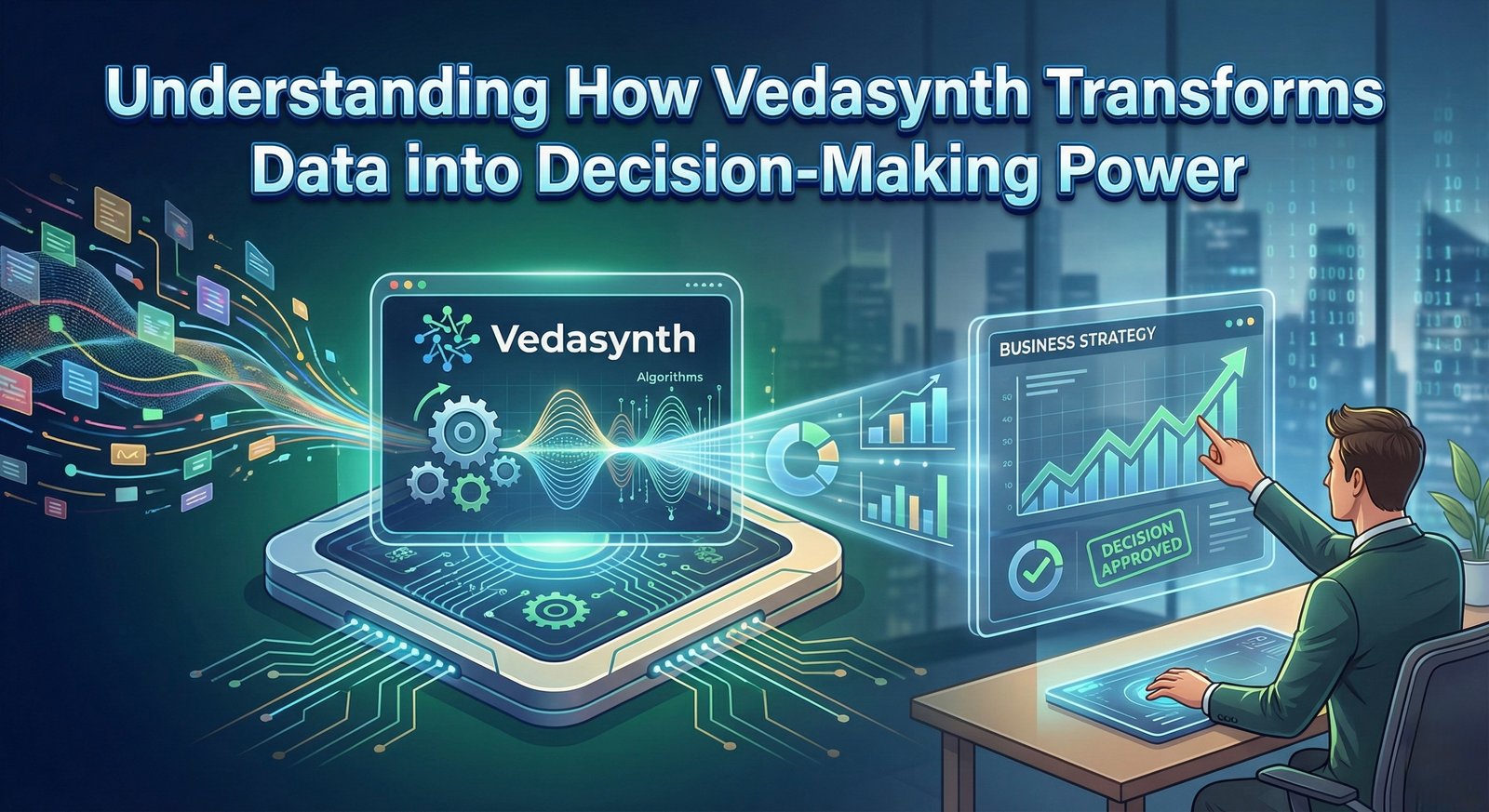
Data in 2025 is each business's greatest treasure - but only if used smartly. Pure data is not mighty by itself; the magic comes when AI converts that data into foresight.
Predictive analytics powered by AI comes into its own here. It gives organizations the ability to transcend what has occurred and actually predict what's coming next.
From demand forecasting to risk identification, AI-powered predictive analytics driven by machine learning (ML) and generative AI is transforming how companies plan, run, and innovate.
Let's get into how this revolutionary technology is remodeling the business landscape and how you can capitalize on it through VedaSynth AI Solutions' solutions.
1. What is AI-Driven Predictive Analytics?
Predictive analytics employs statistical algorithms, ML models, and data mining procedures to predict future results from past history.
Combining AI, predictive analytics elevates itself above mere reporting - it learns from trends, detects anomalies, and always refines forecasts.
AI makes predictive analytics:
Adaptive: Models automatically update with new arriving data.
Accurate: Deep-learning models extend to complex, nonlinear associations.
Actionable: Results are integrated directly into decision workflows.
Example: A retail business can predict next-season product demand by reviewing historical sales, customer trends, and even social-media sentiment - all automated by AI.
2. Why Businesses Are Adopting Predictive Analytics in 2025
Predictive analytics powered by AI is now a strategic business differentiator across sectors. Companies using it cite measurable outcomes such as improved efficiency, lower costs, and increased decision accuracy.
Top reasons for adoption:
Cost optimization: Predict maintenance faults before failures.
Revenue growth: Uncover cross-sell or up-sell opportunities.
Customer retention: Forecast churn and act pre-emptively.
Operational agility: Respond rapidly to market shifts with real-time insights.
As reported by recent studies, businesses employing AI predictive systems enjoy up to 40% higher planning accuracy and 25% shorter decision cycles.
3. Real-World Applications Across Industries
AI predictive analytics isn't just for tech giants - it's available to every business size and industry.
a. Retail & E-Commerce
Demand forecasting for product stock
Personalized recommendation using predictive personalization
Price optimization with dynamic AI models
b. Finance & Banking
Fraud prediction through anomaly prediction
Credit-risk scoring with customer behavior data
Portfolio optimization with ML-based forecasting
c. Healthcare
Prediction of early diagnosis from patient history
Drug efficacy prediction
Predictive resource allocation in hospitals
d. Manufacturing & Supply Chain
Predictive equipment maintenance
Supply-chain disruption prediction
Smart inventory management based on AI signals
e. Marketing & Customer Experience
Predict campaign success prior to launch
Predict customer lifetime value (CLV)
Personalize content for high engagement
4. How AI Models Make Accurate Predictions
AI prediction systems are based on integration of data pipes, machine-learning algorithms, and real-time feedback loops.
The core steps include:
Data Collection: Collect historical and real-time data from CRM, ERP, IoT, and online channels.
Data Preparation: Cleanse, normalize, and format data for modeling.
Model Training: Train ML models (e.g., regression, LSTM, or random forests).
Prediction & Visualization: Make forecasts, probability, or trend curves.
Continuous Learning: Models automatically retrain as new data becomes available.
Our AI pipelines at VedaSynth AI Solutions automate all this process guaranteeing predictions to be real-time, trustworthy, and understandable.
5. Business Impact of Predictive Analytics
Predictive analytics is not a data-science abstraction - it's a profitability driver.
Measured impacts include:
+35% revenue increase through directed customer insights
?30% operational loss through improved resource planning
+50% quicker market response with predictive demand models
Organizations that make an investment in AI forecasting achieve increased ROI since each choice becomes data-driven rather than gut-based.
6. The Future of Predictive Analytics: From Insight to Autonomy
The next step is autonomous predictive systems AI that not only makes predictions but also acts automatically.
For example:
Anticipating an unexpected surge in demand and automatically re-ordering stock
Identifying potential churn and automatically sending personalized retention offers
Forecasting financial risk and dynamically adjusting exposure
This AI independence is changing operational intelligence - a cutting-edge VedaSynth AI Solutions is vividly leading with adaptive AI models and cloud automation.
7. How VedaSynth AI Solutions Can Help
We offer end-to-end Predictive Analytics as a Service (PAaaS) specially designed for each business phase:
Custom AI Model Design - Trained on your domain-specific data
Data Pipeline Automation - Effortless data ingestion and cleansing
Real-Time Forecasting Dashboards - Interactive analytics for leadership teams
Scalable Cloud Deployment - Secure and compliant integration
Irrespective of whether you work in retail, manufacturing, finance, or healthcare - we enable your data to become a source of differentiation.
Conclusion
Predictive analytics with AI is not a fleeting trend - it's the foundation of businesses of the future.
By transforming data into foresight, organizations can see change coming and seize opportunities, and deliver exponential growth. In 2025 and beyond, success will be for those who don't merely gather data - but forecast the future with it.
Recent Post