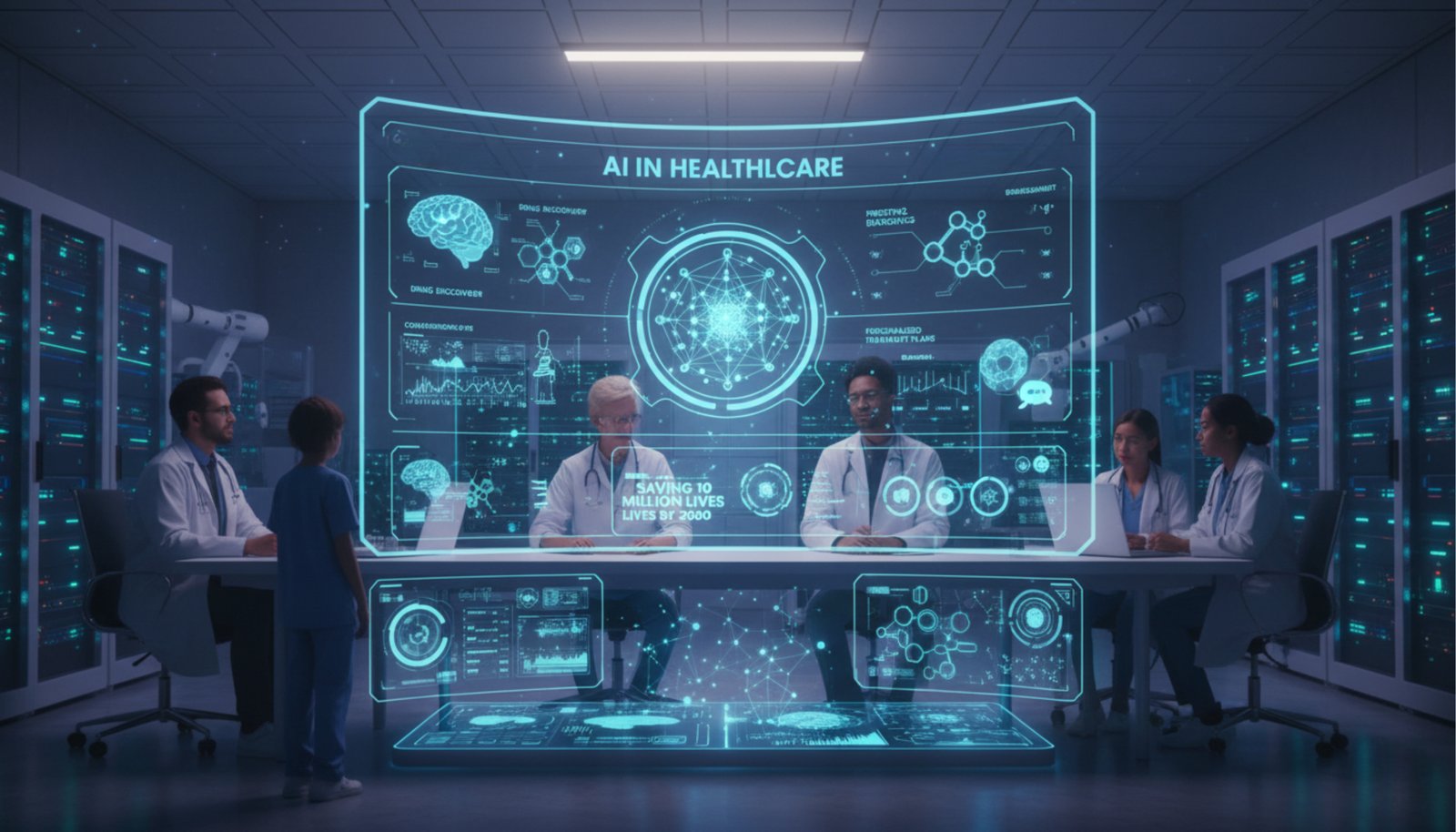
AI in Healthcare - How Artificial Intelligence is Powering the Future of Medicine
Introduction
The healthcare sector is witnessing one of the most profound revolutions ever - and at the center of it is Artificial Intelligence (AI).
From drug development and diagnostics to hospital administration and patient care, AI is transforming how healthcare workers diagnose, treat, and manage patients.
By 2025, AI is no longer just assisting doctors - it’s redefining modern medicine, helping save lives with speed, precision, and personalization that was once unimaginable.
In this blog, we’ll explore how AI is revolutionizing healthcare, the key technologies driving this change, and how VedaSynth AI Solutions empowers medical institutions to embrace the future of intelligent healthcare.
1. Why AI in Healthcare is a Game-Changer
Healthcare creates vast amounts of data - patient records, lab results, imaging studies, prescriptions, and real-time monitoring data.
It's impossible to analyze this in person at scale. Enter AI.
AI systems can:
Process patient data instantly and accurately
Identify patterns not visible to human eyes
Make disease predictions before symptoms occur
Suggest treatment plans tailored to each patient
PwC says AI has the potential to save the world's healthcare sector more than $150 billion per year by 2026 through automation and accuracy diagnostics.
2. AI Applications Transforming Healthcare
Let's get into the biggest real-world applications where AI is having a significant impact.
a. Predictive Diagnostics
AI can identify diseases before traditional methods - often before symptoms appear.
Machine learning models examine blood tests, genetic information, and imaging scans.
AI algorithms detect risk patterns for diseases such as cancer, diabetes, and heart disease.
Predictive models warn physicians to take preventive measures.
Example: Google Health's AI model detected diabetic retinopathy from retinal images with 99% accuracy - beating human experts.
b. Medical Imaging & Radiology
AI is transforming the way radiologists read X-rays, MRIs, and CT scans.
AI algorithms highlight anomalies like tumors, fractures, or infections.
Improved speed of diagnosis with automated image segmentation.
Deep learning platforms help detect early indicators of illness.
Artificial intelligence imaging lowers diagnostic time by 70% and raises accuracy.
c. Drug Discovery & Development
New drug development takes 10+ years and billions of dollars to achieve. AI speeds this up immensely.
AI algorithms mimic how various compounds behave around human cells.
Predictive analytics detect potential drug targets more quickly.
AI simulations maximize dosage and delivery systems.
Example: Insilico Medicine utilized AI to find a prospective drug for fibrosis in less than 18 months, which normally would take years.*
d. Personalized Medicine
Each patient is different - and AI assists physicians to treat them as such.
Algorithms process genetics, medical history, and lifestyle information.
Predictive models recommend individualized treatment regimens.
AI-driven suggestions optimize recovery and minimize side effects.
Precision oncology employs AI to personalize cancer patients to genetic marker-targeted therapies.
e. Virtual Health Assistants
AI-powered virtual assistants and chatbots are revolutionizing patient engagement.
Respond to medical questions 24/7.
Book appointments and remind patients of medication.
Gather symptom information for physicians prior to consultation.
Example: Babylon Health's AI assistant processes millions of patient interactions per month, taking hospital loads off.*
f. Hospital Management & Operations
AI isn’t just helping patients - it’s optimizing how hospitals operate.
Predicts patient inflow to manage bed occupancy.
Automates billing and insurance verification.
Optimizes staff allocation and supply chain.
Monitors hospital equipment through predictive maintenance.
Hospitals using AI-driven management systems save 30–40% in administrative costs.
3. Key AI Technologies Powering Modern Medicine
The AI healthcare revolution is built on several core technologies:
4. The Benefits of AI in Healthcare
AI brings precision, efficiency, and scalability to the entire healthcare ecosystem.
5. Challenges in Implementing AI in Healthcare
Notwithstanding its potential, healthcare AI encounters some challenges:
Data Privacy: Secure protection of patient data and data compliance (HIPAA, GDPR).
Integration Issues: Seamless integration with existing hospital systems.
Bias in AI Models: Fairness and accuracy across populations.
Adoption Barriers: Resistance because of insufficient AI training among personnel.
At VedaSynth AI Solutions, we solve these issues by creating safe, compliant, and ethical health care AI systems for health care organizations.
6. How VedaSynth AI Solutions is Powering Smart Healthcare
At VedaSynth AI Solutions, we're experts at developing health care systems powered by artificial intelligence that combine intelligence, efficiency, and empathy.
Our health care AI solutions are:
AI Diagnostic Systems: Computerized image and data-based disease diagnosis.
Predictive Health Analytics: Early detection of disease risk and prevention insights.
Virtual Health Assistants: 24/7 patient care and appointment scheduling.
Hospital AI Automation: Intelligent workflows for operations and admin.
Drug Discovery & Genomic AI Models: Fast-tracking medical research and development.
We assist hospitals, clinics, and health startups to integrate AI seamlessly - enhancing patient and provider outcomes.
7. The Future of AI in Medicine
The future holds a decade where AI will become a part of every medical decision.
Imagine:
Smart wearables that warn physicians before a heart attack strikes.
AI surgeons helping with precision surgeries.
Autonomous diagnostic laboratories processing results in seconds.
Predictive systems that interrupt epidemics before they spread.
In 2030, AI will save more than 10 million lives per year through quicker, more precise medical decisions.
Conclusion
Artificial Intelligence is not taking doctors' jobs - it's enabling them.
AI combines the best of both worlds - human compassion and machine precision - to deliver a smarter, safer, and more personalized healthcare system.
At VedaSynth AI Solutions, we're convinced that AI-based healthcare is not only the future - it's already a reality. And we're here to guide every healthcare organization toward embracing it responsibly and successfully.
Recent Post